







Showing posts with label The Write Facts Interview. Show all posts

Monday, February 20, 2012

The "Write" Facts Interview: Lauren DeStefano

The “Write” Facts is a new weekly post where I’m chatting with a different author every week about everything to do with writing. Here we’ll be discussing the writing process, editing, working with an agent, publishing houses and talking about some of the logistics of book you either already love or will soon be a new favorite!

This week brings Lauren DeStefano to the blog. Lauren DeStefano wrote Wither which is a dystopian that came out last year and Fever which comes out tomorrow!
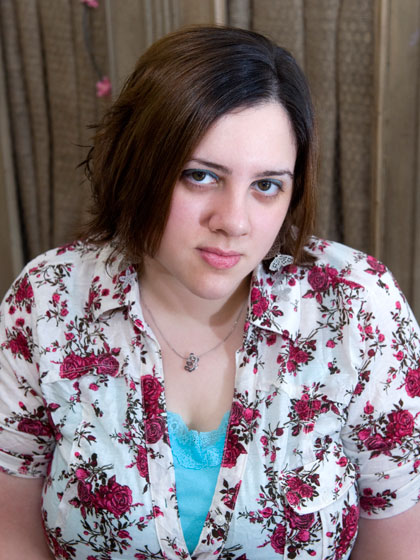
Lauren DeStefano
Novel: WITHER (3/11) FEVER (2/12)
Agent: Barbara Poelle at Irene Goodman Literary Agency
Other authors repped by this agent: Sophie Littlefield
Publisher: Simon & Schuster Books for Young Readers
Word Count: Roughly 88,000
Describe your novel in five words: A broken fairytale sans
vampires.
Favorite Word: Somnambulate
Writing is like (fill in blank): Getting punched in the everywhere.

1) Are you a plotter or a pantser (write without a plot to see where the story takes you)?

Something in between, I think? For Wither, I just started writing
with no idea what the story would be, and the more I wrote, the more the world appeared around me, and I started to draw lines and roughly plan things. They never go exactly as planned, though, so I don't get too married to an idea.

2) What do you think is the hardest part about writing? The easiest? 

The hardest part is actually writing. The easiest part is thinking and getting excited about new ideas.

3) Can you tell us about The Call and why you chose your agent? 

Ah, the call. It began in 2008 with a rejection letter. Fresh out of college, I'd just begun shopping my first manuscript, and I stopped counting the rejections after 140. One agent's rejection in particular was specific,
attentive, and invited me to try back with another project. That agent even checked in with me to see how my next manuscript was coming along. I really felt like we were simpatico and she was the ONLY agent I queried with my next project. About a week later, I got that "212 area code" call that every writer dreams of. First of all, she pronounced "DeStefano" correctly, and her exact phrasing was, "I just finished (name of MS that will never see daylight) and I want to rock it." So it goes from there.

4) Any tips or tricks of the trade that you use during the editing process that you’d like to share? 

I don't think there are any tricks and I wouldn't advise looking for one. If you have a drive and willingness to improve (no matter where you are in the game) and you have talent, you will get there. That's all it takes--drive and talent. Don't believe what the garden gnomes tell you; they're just trying to sell you a potion they've
fashioned from squirrel spit.

5) Can you tell us how you felt when you got the file for your novel cover and opened it? 

First, I got a text from my agent that was along the lines of, "I just saw your cover, I love it, they nailed it, my husband saw it, he loves it, I showed it to strangers on the subway and everyone loves it." My agent really isn't the sort to say things like that; she's got an incredible poker face, so for this level of excitement I knew it was going to be great. Sure enough, the cover was more than I could have wished for. It was so amazing that I sort of went into shock and I had to look at it several times over the course of a few days before my brain started seeing all the different props and elements. Basically, I feel like it's a perfect manifestation of Rhine's thoughts and her father-in-law's basement.

6) What has been your best experience as a published writer? 

Interacting with my readers. All my life, I've been a storyteller, and I've only told those stories in my own head. The day I got published, I set my thoughts out for thousands of readers to find, and they are reacting, and that means a lot to me.

7) What’s it like working with your agent? Are they hands on? 

Oh goodness. I don't know if I can articulate the bond I have with my agent. We've been through three pre-Wither manuscripts and a lot of heartbreaks together. When we first signed in 2008, she gave me a prompt to write 20 synopses. One in particular was a favorite of hers; I thought it was too ambitious and I wasn't ready to write it, so I set it aside. In late 2009, that synopsis grew into Wither. I say something to this effect in my acknowledgements, but without that prompt, and without my agent, this story probably wouldn't exist. Hands on is an understatement.

8) Can you show us your favorite place to write (could be your desk, a favorite cafĂ©, the most comfy couch in the world)? 

My favorite place is my home office. It used to be a dingy attic with a pink carpet and a hole in the wall for circulation. I completely redid it, and it's the most "me" room in the house. I spend almost all of my time in it. 

The before: http://twitpic.com/7lqko1 and the after: http://twitpic.com/7lqkxs/full

9) How do you feel about using online media? Has the effect been over all good or have there been some drawbacks? 

I love online social media. I love that readers share their thoughts with me, and I love that they ask me about my cats.

10) What is your best piece of advice for aspiring authors? 

Don't take advice too seriously.

Finally, I've got to get a question in about Fever!

Bonus question: I love Rhine but she seemed a bit lonely in WITHER. If you could pick another literary character to be her best friend, who would it be and why? 

Several years ago, I read a book called 26A by Diana Evans, and it's one of those rare reads that forever impacted the way I think, both as a writer and as a regular human person. The impact was sharp at
first--I saw the world in brighter, sadder colors--and eventually it ebbed and settled into the crevices of my brain and now I can no longer tell which thoughts are my own and which are inspired by that book. It's also
about twins--sisters. I would say that Rhine would relate well with Bessi, who saw the wonder in things and was caught between having a life of her own and worrying for her twin. Rhine is always looking forward, always trying to live and to find a purpose to things, but quite often she looks back at the space where her twin brother should be. She doesn't feel like a complete person without that twinness, and neither does Bessi.

I want to thank Lauren DeStefano for stopping by and giving us some insight into her journey in writing! Next week, Kelly Keaton is going to be in the interview seat so we can get all the "write" facts!

Monday, February 13, 2012

The "Write" Facts Interview: Courtney King Walker

The “Write” Facts is a new weekly post where I’m chatting with a different author every week about everything to do with writing. Here we’ll be discussing the writing process, editing, working with an agent, publishing houses and talking about some of the logistics of book you either already love or will soon be a new favorite!

This week, Courtney King Walker is here to talk about her novel ON THE FRINGE and to share her writing journey. Set back, relax and prepare to chat about all things writing!

Courtney King Walker
Novel: On the Fringe
Agent: I currently don’t have an agent.
Publisher: Lands Atlantic Publishing
Word Count: just over 70,000
Describe your novel in five words: First love lost. Then found. *(It also works as an anagram. Sort of. Check it out)
Favorite Word: Inconceivable!
Writing is like (fill in blank): Being a kid again.

1) Are you a plotter or a pantser (write without a plot to see where the story takes you)?

A little of both. I always seem to start with an opening scene, and then build the story around that. Sometimes that opening scene will end up in the middle of the story instead of the beginning, but that is where the initial idea comes from. Then I build on that. Unfortunately, I also lose all my stamina if I don’t have a basic outline to follow (and some munchies nearby). So I always eventually deviate from the “master plan” as I go along…sort of like how real life works— it seems I never actually end up exactly where I’d planned. But I’m still happy when I get there, and grateful for the journey.

2) What are some of the things you do to motivate yourself to write? Do you have any goals set up, rewards or do you not need motivation? 

Music inspires me more than anything else. My little sister makes these playlists for me with all sorts of killer music that no one has discovered yet. Literally dozens of times I’ve been in the movies and at the mall, only to hear a ‘new’ song she’d turned me on to well over a year ago.

One character in On the Fringe, Aden, was inspired by a song by Mirah, called “The Garden,” also a crazy creepy delicious dance performed on “So You Think You Can Dance” three years ago. I modeled Aden after the character in that dance.

Another song that really inspired the whole idea of Claire and Daniel’s brief connection to each other is a song by Sea Wolf called “Middle Distance Runner.” It is a haunting, beautiful song that gets me every time. The words mean something like, he is a middle distance runner so he can’t reach her because she is too far away, so she’ll need to come meet him halfway, instead. That is the essence of Claire and Daniel’s story.

Here are the links to them on YouTube (if you’re okay with posting them):

Middle Distance Runner-


The Garden Dance -


I also have a playlist on my website – courtneykingwalker.com

3) Can you tell us about The Call from your publisher?

 I can tell you about The Call from my publisher. I’d just come home from a business trip with my husband, and had decided that after a year of trying to get published, it was time to put my manuscript in a drawer and start on something new. And then my phone rang. It was my (now current) publisher, telling me how much she loved my book and that she wanted to publish it. When I got off the phone, the first thing I did was cry. Which is a big deal for me because I’m sort of waterproof, even at funerals and at Nicholas Sparks movies. Anyway, I literally cried out loud, and said a little prayer of thanks before doing anything else (like calling my husband or breathing).

4) What is the most important part of editing?

That is such a tough question! I actually really love editing, which makes me crazy, according to my 15-year-old son. When I was helping him with an English paper, he said to me, disgusted, of course, “You actually like writing? I’d rather do ten pages of algebra than this.” I guess I shouldn’t expect him to follow in my footsteps.

I would have to say that, other than making sure there are no glaring errors, getting the “voice” right is probably most important and most difficult part of editing for me, because that is what gives the book its personality. In “On the Fringe” the POV is written for both Claire and Daniel, which made the task doubly hard; it was definitely the most challenging part for me, trying to make each voice unique and consistent from beginning to end.

5) How do you deal with rejection?

I am a graphic designer, and in college one of the first things my design professors taught me was to accept criticism as part of the game, as a way to make you be a better artist. So I do see rejection and criticism in that light. Anyone who is creative and puts their work out there won’t ever grow if they buckle under the pressure. But, no matter how constructive it is, rejection still hurts (though, as mentioned above, it doesn’t make me cry! YET).

6) What is something you didn’t expect to happen after you published your novel?

Seeing my parents’ genuine pride in me, and their enthusiasm for my accomplishment. It seemed a given for them to cheer me on and encourage my every achievement when I was a kid. Like, that was their job, right? So after being away from home for so long, it was surreal and overwhelming and touching to come home for a book signing and have my mom and dad there for me, cheering me on, being my number one fans. I felt like I’d just won first place in the spelling bee, or scored a winning goal in soccer. Seeing such love and pride in their eyes, if nothing else, was worth more than anything else I could gain from this.

7) What is your best piece of advice for aspiring authors?

Write something meaningful that holds a place in your heart. That way, no matter what anyone else thinks or says or does, you know you wrote something you can stand by and be proud of. I think one of the most important things we can learn in life is that our own view of ourselves is much more important than anyone else’s. Sometimes we try so hard to get other people to like us that we forget how to love ourselves.

Finally, while I have Courtney here, I had to ask her a question about ON THE FRINGE!


Bonus question: Claire seems lost and searching. What do you think she'd bring along on her journey as a compass to remind her of herself?

Such a great question (at which my son would cringe)! I think Claire would bring with her a little flickering candle, barely lit, but definitely burning. By the end of the novel, Claire becomes a beacon of light, not just to those around her, but also to herself and even to those on the other side. Her courage to believe in herself and overcome her fears, especially when everything around her is foggy and unclear, is really the catalyst to each character finding their very own ‘happy ending.’

I want to give a big thanks to Courtney King Walker for stopping by the blog today and answering my questions! Next week, Lauren DeStefano is dropping by to discuss all things writing!

Monday, February 6, 2012

The "Write" Facts Interview: Jessica Spotswood

The “Write” Facts is a new weekly post where I’m chatting with a different author every week about everything to do with writing. Here we’ll be discussing the writing process, editing, working with an agent, publishing houses and talking about some of the logistics of book you either already love or will soon be a new favorite!

Today, we've got Jessica Spotswood on the blog, talking about her debut novel BORN WICKED. It's being compared to Libba Bray's A GREAT AND TERRIBLE BEAUTY and Cassandra Clare's novels. Check out what Jessica Spotswood has got to say.

Jessica Spotswood
Novel: BORN WICKED
Agent: Jim McCarthy 
Agentmates: Cyn Balog, Jill Alexander, Heather Brewer, Sarah Wilson Etienne
Publisher: Putnam/Penguin
Word Count: 85,000
Describe your novel in five words: sisters, witches & kissing
Favorite Word: dreadful (I just like the way it sounds!)
Writing is like (fill in blank): scratching an itchy, restless place in my imagination.

1) What are some of the things you do to motivate yourself to write? Do you have any goals set up, rewards or do you not need motivation?

Right now I’m working on revising book2, and it’s pathetically easy to get distracted by twitter and planning my launch party and ordering new BW bookmarks and dropping off the dry-cleaning for my bookseller tour, etc! I use Mac Freedom to turn off my internet for a set period of time (usually an hour or two). When I’m drafting, sometimes I use Write or Die, which will punish me by deleting my words if I don’t keep typing. I reward myself by watching the latest episodes of my favorite shows (Once, Vampire Diaries, Revenge, The Lying Game, Gossip Girl). Or with brownies.

2) Do you find it easier to develop characters or plot the story? Can you explain?

Characters, definitely! When I get stuck, it’s almost always because I’m trying to force a plot point because it’s in my outline and it’s what I thought should happen, but it’s not what the characters would do at this point. Then I need to stop and listen to Cate. The plot has changed a lot, but she has always been gloriously herself, no matter how many revisions the books go through.

3) What do you think is the most important question to ask your agent when you are first trying to decide if they’d be a good fit?

I would ask how they prefer to communicate with clients. It covers a lot of ground: is this someone who’d rather email or call? Who checks in once a week even when there’s not much to report, or who can go months without hearing from you when you’re working on a new project? Who will tell you the details of the submission list or keep you on a strict need-to-know basis? There isn’t necessarily a right answer, just what is right for you. One of my best writer friends has an agent who’s the polar opposite of mine, but we’re both very happy.

4) What surprised you the most after you started working with a publisher?

I was surprised by how fast everything happened! I’d heard horror stories about waiting ages for contracts and edit letters, and I’m not a patient girl. Luckily, that hasn’t been the case for me. My edit letter came three weeks after the offer, on the same day the deal was officially announced in Publisher’s Weekly. And that’s the longest I’ve ever waited for feedback from my editor. We were finished with three rounds of revisions and on to copyedits within three months. With book2, I had my edit letter back within a week. Now, the flip side of that is that my deadlines have been insane!

5) How many novels did you write before BORN WICKED?

Four. Inspired by my epic love of GONE WITH THE WIND, I wrote three sprawling YA historical romances when I was in high school. They were, in retrospect, pretty dreadful, but also very good practice in putting words together. I took a break from writing during college and grad school and came back to it in 2007 with a YA fantasy called INHERITING GAROLASS. That was the manuscript that snagged me an agent in 2009, but it didn’t sell.

6) What part of being published were you most excited about? Was it what you expected?
I am crazy-excited to go to a bookstore and see BORN WICKED for sale. My initial hope when my book was on submission was that I would get enough marketing support that I’d be able to walk into the local B&N and see it on shelves. And it turns out that the support for BW has been enormous and delightful and I will get to see it not only at B&N but in Target and Wal-Mart and airports and lots of wonderful independent stores. I cannot wait for February 7!

7) What is your best piece of advice for aspiring authors?

Surround yourself with supportive friends who will believe in you on the days you don’t. This is a crazy-amazing business, but it’s also crazy-making at times. There will be days when the Doubt Monsters strike, when you get a rejection or a challenging edit letter or a bad review and are convinced that you suck. I got a terrible review the other day and felt very woeful about it, but my husband just said: “Well, that person didn’t like your book, huh?” It is important to have people in your life who love you and support you and can also help you put things into the proper perspective.

While I've got her here, I had to get the scoop on BORN WICKED. Check out my bonus question and the answer!

Bonus Question: BORN WICKED is compared to A GREAT AND TERRIBLE BEAUTY and Cassandra Clare's novels. What I want to know is what literary character Cate would consider herself like.


I don’t know if Cate would think she was like her, but I think she would absolutely admire and adore reading about Deryn Sharp in the LEVIATHAN series. She loves adventure stories.

Thanks so much to Jessica Spotswood for being on the blog today and sharing her journey into the publishing world! Next week, we have Courtney King Walker on, talking about her writing experiences!

Monday, January 23, 2012

The "Write" Facts Interview: Jodi Meadows

The “Write” Facts is a new weekly post where I’m chatting with a different author every week about everything to do with writing. Here we’ll be discussing the writing process, editing, working with an agent, publishing houses and talking about some of the logistics of book you either already love or will soon be a new favorite!

Jodi Meadows has an exciting debut coming out next week called Incarnate. Read on to find out more about her journey!

Jodi Meadows
Novel: INCARNATE
Agent: Lauren MacLeod of the Strothman Agency
Publisher: Katherine Tegen Books/HarperCollins Publishers
Word Count: 80,000
Describe your novel in five words: Reincarnation, newsoul, insecurity, dragons, kissing
Favorite Word: I have lots of favorite words, but since my agent and husband both mock me when I use "keening," I will choose that one today.
Writing is like (fill in the blank): a lot of other things, but more replacement keyboards.

1) Are you a plotter or a pantser (write without a plot to see where the story takes you)?

I'm both. Sort of. I used to be more of an organic writer, with only a vague idea of where I was heading. When I started writing INCARNATE, I did a lot more plotting ahead of time, but I made sure to leave lots of room for the story to grow organically within that structure. Some things, like the masquerade, were completely unplanned until a character brought it up.

2) What are some of the things you do to motivate yourself to write? Do you have any goals set up, rewards or do you not need motivation?

I write with little goals in mind, like getting to 100 words, then 500 words, or reaching the end of the scene/chapter, or getting to a certain part of the story by the end of the day. Whenever I feel like I'd rather go nap, I'm usually really close to another goal, so what's another 50 words? I might as well, right?

Maybe it's like writing "shower" on your to-do list for the day, but it makes me feel productive.

As for rewards, usually there are scenes I'm looking forward to reaching (they tend to involve kissing -- surprise surprise), and I will writer harder just to get to them.

3) Can you tell us about The Call when you got your agent and why you chose them?

The day before Lauren offered, I had the terrifying opportunity to write one of those emails: the kind that says "I've received an offer of representation; please let me know if you'd like to offer, too."

So I was still nervous when I got up that morning. I'd already received one offer I wasn't sure was real and I wasn't sure how I'd manage a whole week without imploding. Then two seconds after I got on my computer and said something on Twitter, Lauren called me. I was still very groggy because I hadn't had coffee yet, so it went kind of like this:

Me, sounding much like a frog: Hello?
Lauren, peppy: Hi, is this Jodi?
Me: Uh huh.
Lauren, peppier: This is Lauren MacLeod. I just finished reading your book and I love it! I want to represent it.
Me: *jawdrop*

It turns out she'd been stalking my Twitter page that morning (because she knew I had a weird sleep schedule), and she wanted to surprise me first thing. (She did.)

Choosing between agents was incredibly difficult, because both who offered were amazing and loved INCARNATE. After a LOT of consideration (I seriously made them wait all week), I accepted Lauren's offer. Not only did we have a great personal connection, she was building her list in the same direction I wanted to build my career. We had similar visions for my book's future and how it fit in the market, and similar visions for my own writing future beyond the INCARNATE books.

There are a lot of things to consider when accepting an agent's offer (I've written a huge blog post about it!), and I was lucky enough to get all my dream agent qualities in one adorable person.

4) When you got your editorial notes from your editor for the first time, was there something that surprised you?

I was lucky enough to have the chance to talk with Editor Sarah before I received my edit letter, so I knew she loved the book and understood what parts were important to me. I knew we had similar visions for it. (I can't stress how important this is when accepting agent and editor offers!)

I'd anticipated something like the best crit partner letter I'd ever gotten, but EVEN BETTER, and that was exactly what I received. I was a little afraid that I'd want to crawl into a hole and never come out after the letter, because I know other writers have felt like that, but I didn't. I was INSPIRED after receiving my letter.

5) Can you tell us how you felt when you got the file for your novel cover and opened it?

Nervous! When the art department asked what book covers I loved, I'd sent gorgeous landscapes and iconic images. The email containing my first cover comp said things like "model" and "photo shoot" and "headshots." By the time I got to the end of the email (I'm one of those rare people who reads the words before scrolling down to the pictures), I was pretty nervous about what I'd find. I'd heard horror stories about authors who hated their covers . . .

Then I saw the girl (not my girl -- a different girl for the comp) with a butterfly mask and all these colors around her and I. Fell. In. Love. Every worry I'd had was gone, just like that because they'd captured my story exactly. By the time they did casting and a photo shoot with Model Susan (who plays Ana on the cover), I was composing love sonnets in my head to the art department. (Fortunately for them, these sonnets were never written down. I'm not a poet.)

6) How do you feel about using online media? Has the effect been over all good or have there been some drawbacks?

I love social media! I love being able to interact with people AND wear my PJs. For me, it's been an overall positive thing. I do sometimes have to remind myself that I blog and tweet for fun, and when it gets stressful, I just back away.

7) What is your best piece of advice for aspiring authors?

Write! And read! And make sure you get up every now and then to combat Expanding Butt Disease, which affects so many writers . . .

Thanks so much to Jodi Meadows for agreeing to do this interview and letting us in on her path to becoming a debut author! I particularly loved hearing about her reaction to the cover!

Next week I've got Lori Strongin!

Monday, January 16, 2012

The "Write" Facts Interview: Gemma Halliday

The “Write” Facts is a new weekly post where I’m chatting with a different author every week about everything to do with writing. Here we’ll be discussing the writing process, editing, working with an agent, publishing houses and talking about some of the logistics of book you either already love or will soon be a new favorite!

Today I've got the pleasure of having Gemma Halliday, author of Deadly Cool and Social Suicide, (and other adult novels too!) her to discuss all aspects of writing. Check out these "write" facts.

Gemma Halliday
Novel: DEADLY COOL, SOCIAL SUICIDE
Agent: Holly Root
Other Authors repped by agent: Myra McEntire, Rae Carson, Rachel Hawkins & Victoria Schwab
Publisher: Harper Teen
Word Count: approx. 80,000
Describe your novel in five words: High school is a killer.
Favorite Word: Dude
Writing is like (fill in blank): awesome therapy or pulling teeth, depending on the day.

1) On a normal day, how many hours do you devote to writing?

Usually about 4.

2) Do you find it easier to develop characters or plot the story? Can you explain?

Plotting the story is something that I always do first, before I start a book. I generally stick pretty close to that plot. The characters, however, tend to develop as I write, so they come more naturally and change as I go on.

3) Can you tell us about The Call and why you chose your agent?

I’ve actually written several books for adults, so The Call for me was for one of those books. I had given myself a deadline to either sell a book or pick a new career by the time my son started kindergarten. I got The Call on the very day my son started. Cool timing, huh?

4) How do you deal with rejection?

At any stage of a writer’s career there is reject to deal with – whether it’s from editors, agents, or reviewers and readers. Someone somewhere will always hate your work. You just have to know that rejection is just one person’s opinion. No matter who that person is! I once had a very well respected editor – whose opinion I really valued – give my book a 1 out of 10. A couple of months later, that very same book – with no revision – went on to win a very prestigious writing award. And it earned me my first sale. For every person who hates your work, there’s someone else out there that loves it.
 
5) Any tips or tricks of the trade that you use during the editing process that you’d like to share?

I tend to edit as I go, so that by the time I type that last chapter, my manuscript is pretty much ready to go. My writing process is that I write as much as I can as fast as I can, just letting the words flow without worrying about spelling, typos, plot holes, etc. I do that until I find myself at a point where I’m not sure what happens next. Then I go back and edit that chunk, and through editing I usually get a clear picture where to go from there. Rinse and repeat until the book is finished, then I do one more quick read through before it’s done.

6) How many novels did you before you got published?

My first published book was the seventh novel I wrote.


7) What is your best piece of advice for aspiring authors?

Keep writing! Don’t get bogged down in endless rounds of edits and revising and don’t get discouraged by rejection. Just move on to the next project and keep writing. The more you write, the better you’ll get, guaranteed.


Now we have to learn a little about Deadly Cool and Social Suicide so I asked a question!

Bonus Question: Hartley and Sam are the best partners in crime. Which other pair of best friends from a YA novel do you think they would get along with?

I would have to pick Nancy Drew and her besties, Bess and George. Even though they’re from different eras, they have that same drive toward the truth, and I think they’d make the best teen crime solving team ever.

I want to thank Gemma Halliday for stopping by the blog to chat about all things writing! Next week's author is debut author Jodi Meadows!

Monday, January 9, 2012

The "Write" Facts Interview: Stacey Jay

The “Write” Facts is a new weekly post where I’m chatting with a different author every week about everything to do with writing. Here we’ll be discussing the writing process, editing, working with an agent, publishing houses and talking about some of the logistics of book you either already love or will soon be a new favorite!

This week's interview is with Stacey Jay, author of the hilarious Megan Berry series (You're So Undead To Me & Undead Much?), The Locket, Juliet Immortal and more! Very excited to have her on the blog!


Stacey Jay
Novel: JULIET IMMORTAL
Agent: Ginger Clark (with Curtis Brown Agency)
Authors also repped by this agent: Jeri Smith-Ready & Kristin Walker
Publisher: Delacorte Press (a division of Random House)
Word Count: 88,000
Describe your novel in five words: Love knows no limits. (Is four okay?) (Answer: Four is even more impressive!)
Favorite Word: Today, I think...reptilian is pretty high on the list. I could never choose one favorite for all time. There are too many good words out there!
Writing is like (fill in blank): skydiving naked--scary and embarrassing, but thrilling all the same.

1) Are you a plotter or a pantser (write without a plot to see where the story takes you)?

I'm a plotter. I usually start with a 5-7 page synopsis broken down into three acts, but, if I'm under a tight deadline, I'll take that a step further and do a chapter by chapter breakdown. That helps me power through a first draft even more quickly if needed.

2) How do you deal with rejection?

Pretty well, actually. I understand that writing is a subjective business and not every reader or editor (or agent when I was looking for one) is going to love my work. All I can do is write the most entertaining, well-crafted book I'm capable of writing at the time and hope for the best, while striving to make every story better than the one before.

3) What’s it like working with your agent? Are they hands on?

My agent is a professional who is extremely up front and I love that. She responds to my submissions quickly, gives spot on feedback, is always ready to help me understand things that confuse me about the business (of which there are still plenty even three years after my first book was published!), and is an advocate for me and my work. An author couldn't ask for more.

4) Any tips or tricks of the trade that you use during the editing process that you’d like to share?
Know thyself: learn what your personal writer ticks are and be on the lookout as you edit. Being aware of them can really help improve your pre-submission draft. (One of my ticks is that I use the word "just" waaaaayyyy too many times in my first drafts. When I'm editing I get pretty ruthless with that word.)

As far as working with an editor is concerned, I'd say the best advice is to take the time to digest before freaking out and hurling yourself on the floor in defeat. Sometimes an editorial letter can seem impossibly overwhelming at first, but if you give yourself a few days to digest and brainstorm, the way often becomes clear on its own.

5) Can you tell us how you felt when you got the file for your novel cover and opened it?

When I received the finished cover file for JULIET IMMORTAL I was blown away. The designer did such an amazing job. I am so, so grateful for that cover.
6) What has been your best experience as a published writer?

Email from readers. Readers are what it's all about, and I do my best to respond to every one of their emails personally. (Though that's getting harder as I have more books out and more feedback rolling in. But for now, I do respond to every email myself.)

7) What is your best piece of advice for aspiring authors?

Read and write every day, and when you're ready to take the step from invested hobbyist to writer-seeking-publication, find a support group. SCBWI (Society of Children's Books Writers and Illustrators) is a great organization that will help you learn the ins and outs, and dos and don'ts before you submit. RWA (Romance Writers of America) is also a great one if you're writing for the adult market (even if you don't write romance, they have a wealth of knowledge to share and the members are a very welcoming crew).

Finally, I've got to ask a burning question about your work!

Bonus Question: Do you think Megan from You Are So Undead To Me would be friends with your other leading lady, Juliet, from Juliet Immortal?


Absolutely! I think Megan and Juliet would be good friends. They have some important things in common--they both work to serve others and make sacrifices for the greater good--but they're different in many ways, as well. Juliet is confident and self-possessed, while Megan is insecure and still figuring out who she wants to be. Juliet can let the dark side of life drag her down, while Megan maintains her sense of humor (even when battling the undead). I think a friendship between them would help Juliet lighten up and Megan hold her head a little higher, and be a good thing for both of them.

Thanks so much to Stacey Jay for stopping by the blog this week and chatting a bit about all things writing! Next week is Gemma Halliday, author of Deadly Cool.


Monday, January 2, 2012

The "Write" Facts Interview: Kendare Blake


The “Write” Facts is a new weekly post where I’m chatting with a different author every week about everything to do with writing. Here we’ll be discussing the writing process, editing, working with an agent, publishing houses and talking about some of the logistics of book you either already love or will soon be a new favorite!


Today, I've got the author of Anna Dressed In Blood and the up coming Girl of Nightmares, Kendare Blake here to discuss all things writing. So here are the "write" facts.


Kendare Blake
Agent: Adriann Ranta, Wolf Literary
Authors at the same agency: 

Publisher: Tor Teen
Word Count: Around 80k
Describe your novel in five words: Boy meets Girl. Girl kills.
Favorite Word: That would be a tie between a defeated-sounding real swear word (*sigh*shrug*"shit") and a flustered barely contained faux swear word (*bodily shakes* "Fricken frick frick!")
Writing is like (fill in blank): Eating chocolate. You just have to do it. If you don't, you get cranky. But sometimes you wish it didn't have so many calories.


1) Do you find it easier to develop characters or plot the story? Can you explain?

Characters. Of course, it's nice to have a basic idea of what the characters might go through. Like, their main obstacle. I knew Cas was going to go up against Anna. That was it. If you get to know your characters, the plot will develop organically, through their situations and unique motivations. Things that happen will feel genuine, less like a twist or a turn, and more like it's just what happens.

2) Can you tell us about The Call and why you choose your agent?

Sure. This is The Call where I got my agent, right? Not The Call where I got my publisher? Okay. So I had to offers from two fantastic agents. I had good conversations with them both, and they were both extremely enthusiastic about the work. One was from a larger agency, one from a smaller, boutique type. It was a nauseous choice. My gut told me which was the right fit, but who trusts their gut, at a time like that? So I left it up to fate and flipped the remote control like a coin, three times. They all came up for Adriann. Then I flipped it again, just to make sure it wasn't weighted weird and could actually flip the other way. Yeah. It was pretty scientific.

3) What do you think is the most important question to ask your agent when you are first trying to decide if they’d be a good fit?
Ask them everything that is important to you. That's the most important thing to ask: everything that you want to ask. Don't hold anything back. If you want to know how they would handle your career through a genre-shift, ask. Want to know what their plan would be for submitting your work? Ask. Want to know how much revision they'd want before sub, and how that process would work? Ask. Want to know how they prefer to communicate with clients? ASK.

4) Any tips or tricks of the trade that you use during the editing process that you’d like to share?

When it comes to the first round of edits, the bigger, conceptual edits that might require some real revision or scene addition/deletion, I like to let it sit a few days. Read the editorial letter. Go, hmm. Then let it sit. Even if it feels like I know just what needs doing, I let it sit.

5) What surprised you the most after you started working with a publisher?

The fact that I was working with a publisher. It took awhile for the stars to leave my eyeballs. Some of them are still in there, actually. And sometimes they scratch. It surprised me, I guess, just how many eyes are on a manuscript through the process, and yet, each time, they find new mistakes! I used to get so annoyed when I'd read a book and it would be missing a period, or missing a space between words, but seriously, that crap really has a way to sneaking by.

6) How do you deal with rejection?

Badly. I go all Hemingway, only, not with the suicide. Or at least sometimes I do. The really big ones. Or the ones with bad timing. Sometimes, you can shrug it off, if you weren't expecting much from it anyway, but come on. Rejection blows goats. And it always will. They say you become accustomed to it (btw, who the heck are 'they'?) but I'm not sure. There's always an element of rejection in writing, well, in life really. And I suspect that it always sucks. I suppose I should give some advice, something gruff like, "Buck up and get used to it" or something sunny like, "start a new project." But I'm not going to do that. It's different for everyone.

7) What is your best piece of advice for aspiring authors?

Read. Always read. Not just in your genre. Actually, read outside of it. Find writers you admire, and think about why they're good. Watch the ways they handle certain narrative situations. It's interesting to think about things like perspective choices, or the passage of time, or the pacing at which things unfold. Read a first person. Read a third limited. Read omniscient. Read epistolary (even though sometimes that's like pulling teeth.) Be a student of the craft. And then go back and read for fun.

And here's a question specifically about the main character Cas in Anna Dressed In Blood and Girl of Nightmares!
Bonus Question: I always tell people that Cas is the best part of the Winchester brothers from Supernatural rolled up into one. If you could add another fictional character into the story to hunt ghosts with Cas, who would you pick and why?

Hmm. Fun. I think I would choose both Dr. Wilson and Dr. House. They could really break down the pathology of the ghosts. And they could prank the hell out of each other. It would probably end up broken down into teams: Carmel and Wilson trying to temper Cas and House, with Thomas trying to referee.

Thanks so much for having me by the Rabbit Hole! -Kendare

Pleasure was all mine! Hopefully you got something useful out of this. Want to thank Kendare Blake for dropping by. Next week, Stacey Jay is popping by to share some priceless information on the world of publishing!
Related Posts with Thumbnails
 
Blog Design by Use Your Imagination Designs all images form the Impossible Things kit by Studio Tangie and Rebecca McMeen